Choose your fighter: understanding and picking the right campaign objective
Last updated: June 5, 2026
Setting your Campaign Objective is the first and most critical step in building an effective conversational AI. This choice defines the AI's primary mission, dictating how it engages with your audience and which data points it prioritizes for collection.
When you launch a new campaign, selecting an objective is your starting point. Below is a comprehensive overview of each option to ensure your AI is perfectly aligned with your business goals.
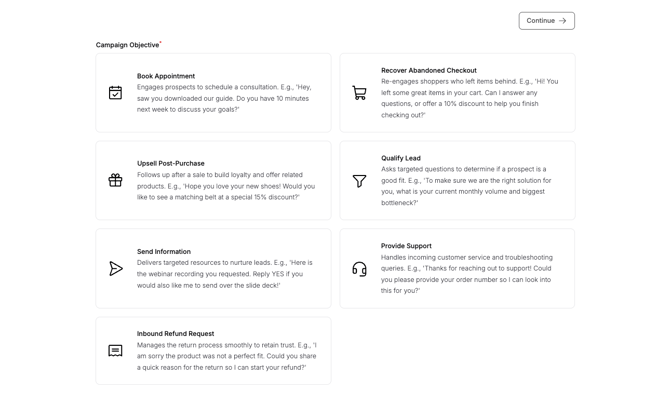
1. Book Appointment
This objective focuses on transitioning a digital lead into a scheduled meeting or consultation. It streamlines the scheduling process by handling the initial engagement and logistics. You can easily connect your Calendar to book meetings directly on the call.
Best Use Case: Ideal for sales teams and service providers where a discovery call or consultation is the primary conversion event.
Example: "Hey, saw you have registered on our platform. Would you like to book a free onboarding call to help you with the setup?"
💡 Learn more about setting up your calendar here: Calendar Tetris: How Meetings Land on Your Schedule
2. Upsell Post-Purchase
This mission focuses on increasing Customer Lifetime Value (CLV) by recommending relevant, complementary products immediately following a successful transaction.
Best Use Case: Best utilized to increase Average Order Value (AOV) and reward customer loyalty with exclusive post-purchase offers.
Example: "Hope you love your new shoes! Would you like to see a matching belt at a special 15% discount?"
3. Recover Abandoned Checkout
Designed to reduce cart abandonment, this objective re-engages users who have added items to their shopping cart but failed to complete the purchase.
Best Use Case: Essential for e-commerce retailers looking to recover lost revenue and address potential friction in the checkout process.
Example: "Hi! You left some great items in your cart. Can I answer any questions, or offer a 10% discount to help you finish checking out?"
4. Qualify Lead
The Lead Qualification objective automates the vetting process. By asking targeted questions, the AI determines if a prospect meets your criteria before they are passed to a human representative.
Best Use Case: Recommended for businesses with high lead volume to ensure the sales team prioritizes high-value opportunities.
Example: "To make sure we are the right solution for you, what is your current monthly volume and biggest bottleneck?"
5. Send Information
This objective facilitates top-of-funnel lead nurturing by delivering requested resources, such as whitepapers, webinar links, or product brochures, directly to the user.
Best Use Case: Useful for content marketing strategies where providing immediate value is the primary goal of the interaction.
Example: "Here is the webinar recording you requested. Reply YES if you would also like me to send over the slide deck!"
6. Provide Support
A customer-centric objective tailored specifically for inbound traffic. It is designed to handle routine troubleshooting, FAQs, and general service inquiries without human intervention as they come in.
Best Use Case: Critical for improving response times and reducing the workload on customer support departments by managing high volumes of inbound queries.
Example: "Thanks for reaching out! How can I help?"
7. Inbound Refund Request
This objective manages the return and refund process with a focus on professionalism and efficiency to maintain customer trust despite a product return.
Best Use Case: Important for retail and SaaS businesses to provide a structured, empathetic path for returns while gathering data on why the product was not a fit.
Example: "I am sorry the product was not a perfect fit. Could you share a quick reason for the return so I can start your refund?"